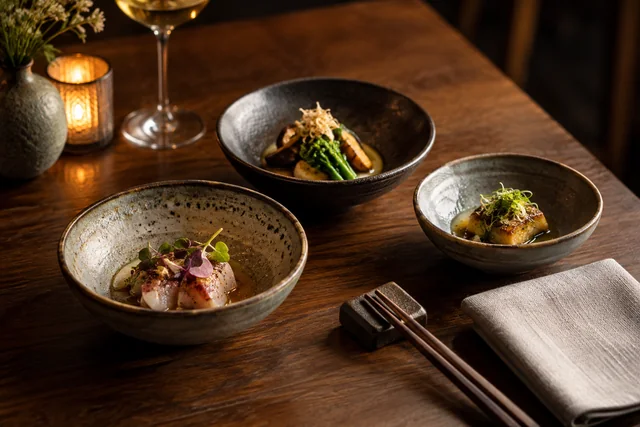
The quiet choreography of counter dining
Counter dining brings guests closer to the rhythm of a kitchen. The experience depends as much on spacing, sound and timing as it does on the food. A comfortable seat should feel considered, not simply close to the action.
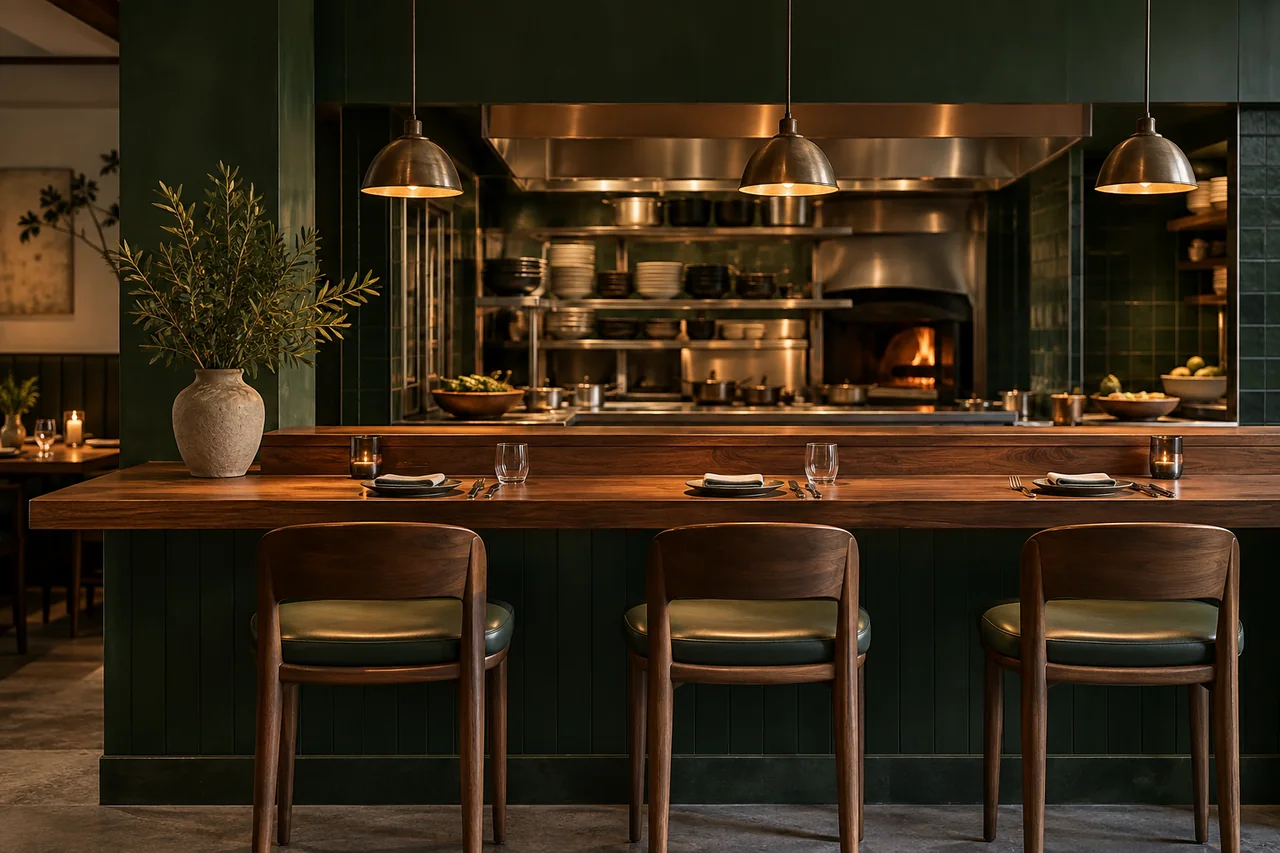
Give the guest room
Think about where a bag, a coat and a glass will sit before adding another place setting. The distance between seats affects conversation and service. Sightlines matter too: the guest should be able to enjoy the activity without needing to lean into a working area. Small practical choices can make the counter feel welcoming rather than crowded.
Make service legible
A clear welcome helps guests understand the shape of the meal. Explain how dishes will arrive and whom to ask about ingredients or preferences. Staff should not need to interrupt every conversation to negotiate where a plate belongs. Consistent placement and a calm pace make the experience easier to follow.
Let the room breathe
Music, extraction, conversation and kitchen sounds all contribute to the atmosphere. Consider them together instead of treating sound as an afterthought. Lighting should help guests see both the food and one another comfortably. The goal is not to stage a performance at every moment, but to let the work of hospitality remain attentive and unobtrusive.