Building a menu around a seasonal ingredient
A seasonal menu begins with an ingredient and a question: what is interesting about it today? Shape, texture and cooking method can change the answer without burying the ingredient beneath a long list of additions.
Taste before designing
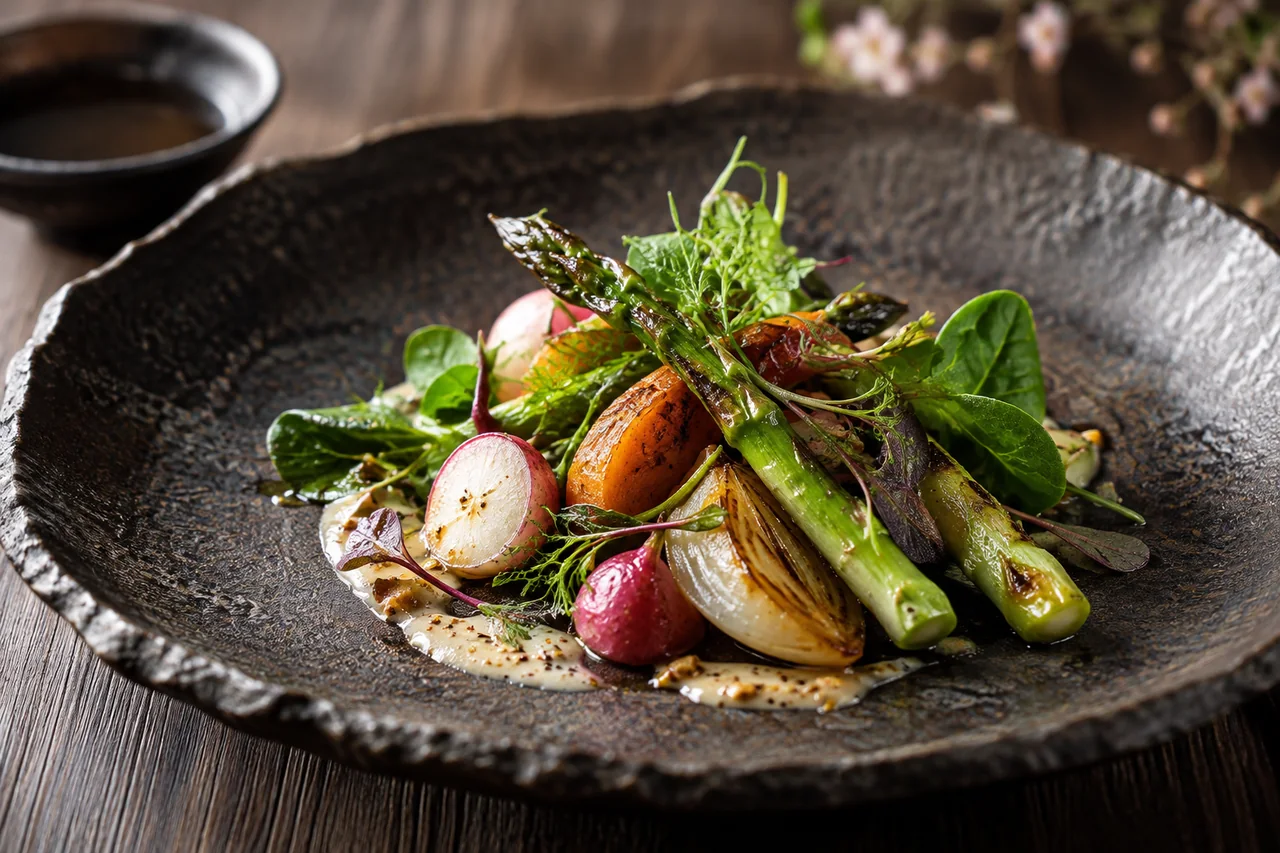
Look at the ingredient’s condition and taste it in a preparation that is safe and appropriate. Note its sweetness, acidity, bitterness or texture. A menu description should grow from these observations rather than from a fashionable combination of words. The kitchen’s actual supply and handling requirements come before a visually appealing idea.
Choose a supporting contrast
A crisp element may bring attention to something soft; a bright dressing may sharpen a mellow flavour. Test the balance in the portion that will be served, not only in a tasting spoon. Consider how the dish will hold between preparation and service. The final plate needs to work through an evening, not just for a photograph.
Make the description useful
Name the principal ingredients clearly and keep a reliable record of components and allergens for the service team. Guests should be able to ask informed questions without guessing what a poetic title conceals. Keep the description aligned with the kitchen as ingredients change. A short menu that accurately describes the plate gives the guest more confidence than an elaborate story that the service team cannot explain.